
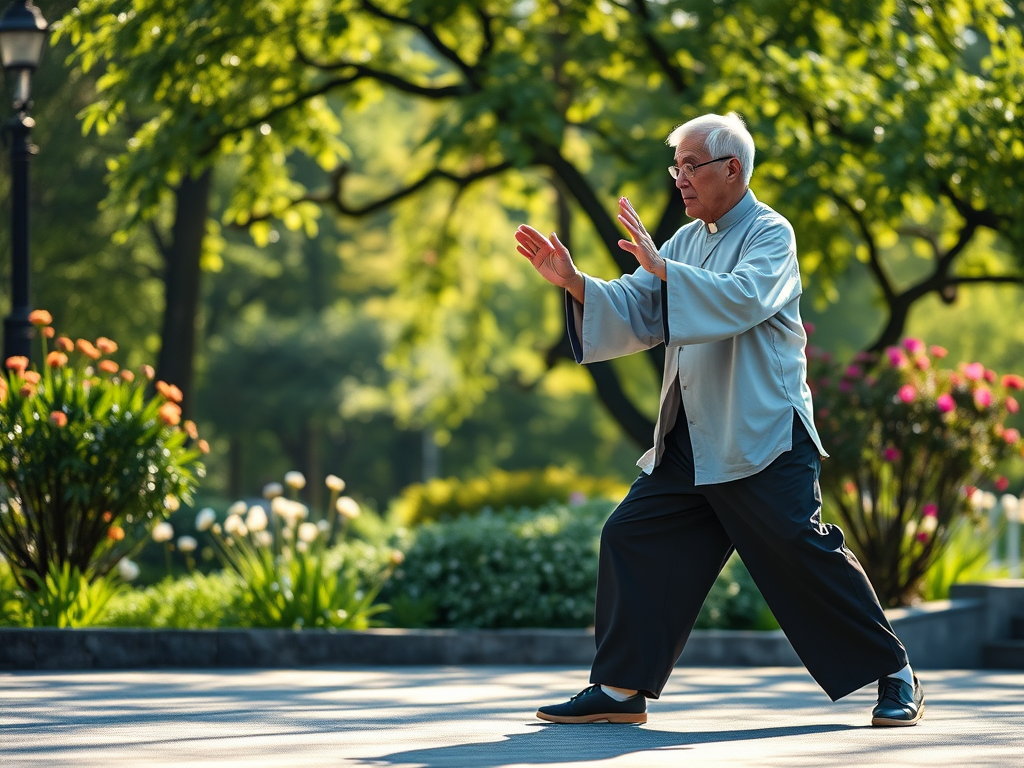
Tai Chi, often referred to as “meditation in motion,” is a traditional Chinese martial art that emphasizes fluid, gentle movements and the cultivation of internal energy, or “qi.” Originating in China during the 13th century, Tai Chi has evolved into a practice that not only enhances physical fitness but also promotes mental wellness and emotional balance. The practice incorporates deep breathing, focused attention, and a series of postures, resulting in a holistic approach to health that benefits individuals of all ages.
The health benefits of Tai Chi are manifold. Research has shown that regular practice can improve balance, flexibility, and muscle strength. These physical benefits are particularly valuable for older adults, as Tai Chi helps mitigate the risk of falls and enhances overall mobility. Additionally, engaging in Tai Chi has been linked to lower blood pressure, reduced stress levels, and improved cardiovascular health. Many practitioners report that Tai Chi fosters a sense of calm and relaxation, which can alleviate symptoms associated with anxiety and depression.
Tai Chi works through its emphasis on slow, deliberate movements that engage both the body and mind. Each posture in the Tai Chi sequence requires concentration and stability, encouraging mindfulness and serving as a form of moving meditation. The practice also involves deep-breathing techniques that promote relaxation and help oxygenate the body. Furthermore, Tai Chi is adaptable; it can be practiced indoors or outdoors, making it easily accessible. Classes and instructional videos are widely available, encouraging widespread participation. (Try YouTube)
In conclusion, Tai Chi is a beneficial practice that enhances health, wellness, and physical fitness through its gentle movements and mindful approach. Its origins in ancient China underscore its historical significance, while its modern applications continue to resonate with individuals seeking comprehensive well-being.
Give it a try! Enrich yourself!
Dr. Rev. Jenine Marie Howry
References:
Jiang, Y., & Zhang, X. (2020). Effects of Tai Chi on the quality of life of older adults: A systematic review and meta-analysis. Journal of Evidence-Based Medicine, 13(2), 124-134.
Lee, J. H., & Choi, T. Y. (2019). The effectiveness of Tai Chi on improving balance and reducing falls in older adults: A systematic review and meta-analysis. Journal of Geriatric Physical Therapy, 42(2), 85-91.
Wang, C., Collet, J. P., & Lau, J. (2004). The effectiveness of Tai Chi on health outcomes: A meta-analysis. Archives of Internal Medicine, 164(5), 493-501.
 Life Lessons by Jenine Marie